
So far 2026 has been a year for continued continuing education. I’ve since enrolled in these courses:
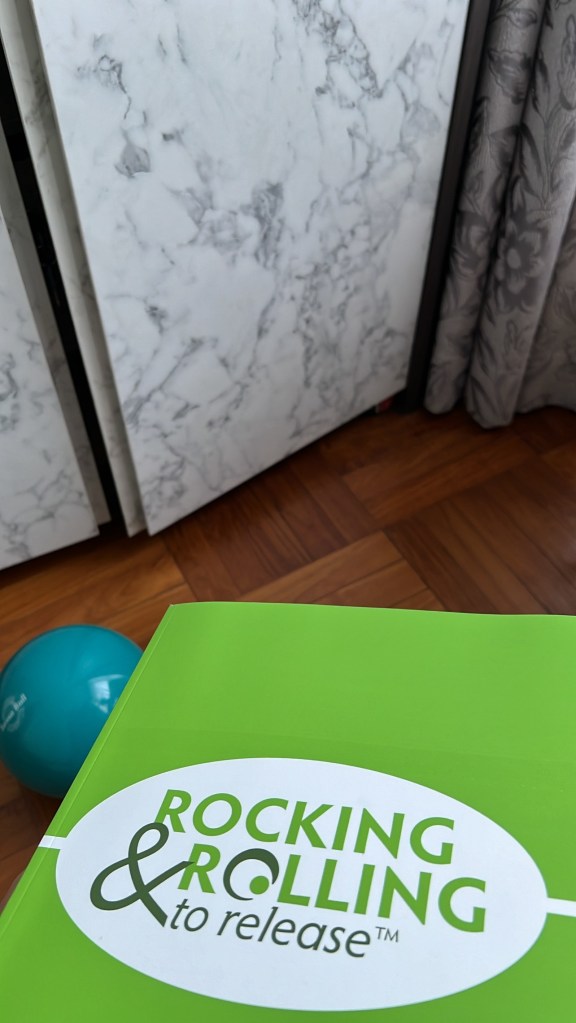
- Centre for Women’s Fitness (now Carolyn Anthony Method) – Rocking & Rolling to Release, Pre & Post Natal Mat & Equipment Trainings
- Core Exercise Solutions PCES and Pelvis Pro courses
- Asia Pilates Summit 2026: Aligned Knee Workshop
Courses I’ve joined online:
- KPlix Posture Series
- Humani Moves Courses on Class Sequencing & Cueing
- Precision Nutrition Level 1 (PN1)
(Update: As of July 2026, I’ve also joined a Neuropilates Level 1 training)
Theme 1: Working with the body, not against it
Many of these courses emphasize understanding why the body moves the way it does rather than forcing it into an ideal position.
Examples:
- Rocking & Rolling to Release → facilitating tissue release and nervous system regulation.
- PCES & Pelvis Pro → respecting physiological changes, adapting exercise appropriately.
- Aligned Knee Workshop → understanding how the whole body influences knee mechanics.
Common thread: Meet the body where it is and improve function through intelligent input.
Theme 2: Whole-person movement instead of isolated muscles
Rather than thinking “strengthen the glutes” or “stretch the hip flexors,” these courses encourage looking at the interconnected system.
Across them you’ll find:
- Fascia
- Core and pelvic floor
- Breathing
- Posture
- Movement chains
- Load distribution
- Functional movement
The question shifts from:
“Which muscle is weak?”
to:
“How is this person organizing movement?”
Theme 3: Nervous system-informed coaching
Although only some courses explicitly mention the nervous system, it’s a recurring principle.
- Gentle myofascial work improves body awareness.
- Cueing changes motor learning.
- Sequencing affects movement quality.
- Pregnancy and postpartum training requires managing load and recovery, not just building strength.
The focus becomes creating conditions for better movement rather than forcing better movement.
Theme 4: Assessment → intervention → integration
Each course contributes to a different part of the coaching process.
- KPlix Posture Series → observe movement.
- PCES/Pelvis Pro → understand underlying contributors.
- Rocking & Rolling → prepare tissues and improve mobility.
- Aligned Knee → refine movement strategies.
- Sequencing & Cueing → integrate changes into exercise.
- PN1 → support adaptation through nutrition and behaviour.
Together they form a complete coaching framework rather than isolated techniques.
Theme 5: Lifelong movement and resilience
None of these are about teaching advanced Pilates tricks.
Instead, they all ask:
- How do we help people move well?
- How do we reduce unnecessary pain or stiffness?
- How do we build strength that lasts?
- How do we support people through different life stages?
 rosalinda.blog
Leave a comment